METHODS

Information Seeking Behaviour
A tool to design and evaluate user information seeking behaviour.

IA Tool
A tool to design a products information architecture.

User Archetype
Create functional user representations for your Design decisions.

User Empathy
Radical user empathy.

Research Dimension
A tool for UX research.

UX Copy-writing Tool
Compose a language that provides users with decision-making clarity.

Designing For Senses
A tool to design for human senses.
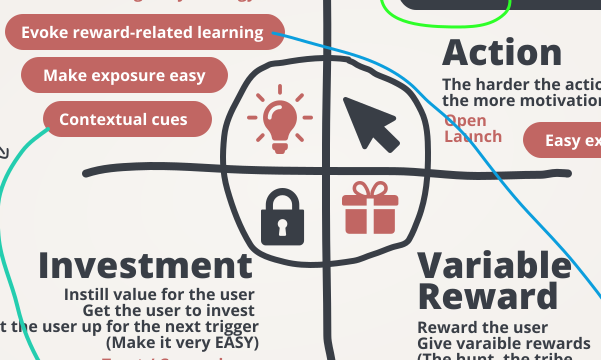
THE HOOK MODEL
Use hedonism and dopamine to create addictive experiences

Systems Thinking
A tool for creating systemic experiences.

Cognitive Task Analysis
Task and cognitive-based design strategy

Iceberg Model
A modified iceberg model for empathetic generative insights.

Designing Structure
Use these tools to design and structure experiences.

Channel-Based User Flows
Tools to design effective User Flows.
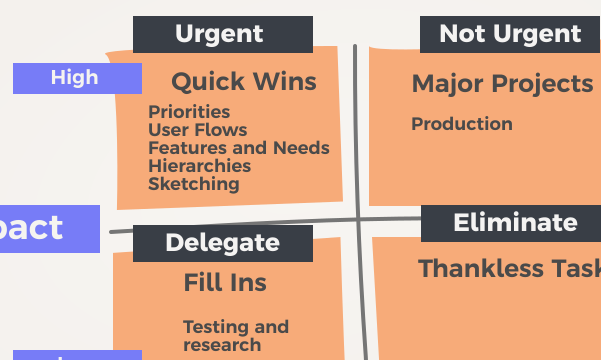
Task Priority
Tools to organise and prioritise activities and purpose.
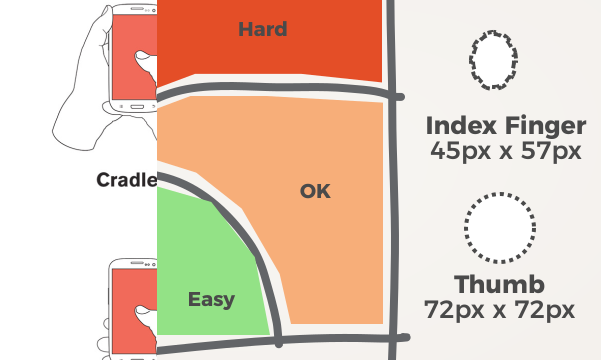
Designing for mobile
Designing for the ever-moving human with fingers as tools.

Visual Structure
Tools to structure Interface Design

Design System Architecture
Create a consistent design voice and culture.

Data-Driven Insights
Use data to inform design and business decision.

Organisational Systems Structure
Design cross-functional Agile teams that communicate well.

Outcome-based Evaluation
Use this as an assessment tool for any evidence-driven process.

Organisational Tools
Information is particularly useful when organised and communicated well.

HCD and Learning
The Human-Centred Design concept is rooted in the pedagogical learning process.

Design System Community
Design system processes and maintainance.
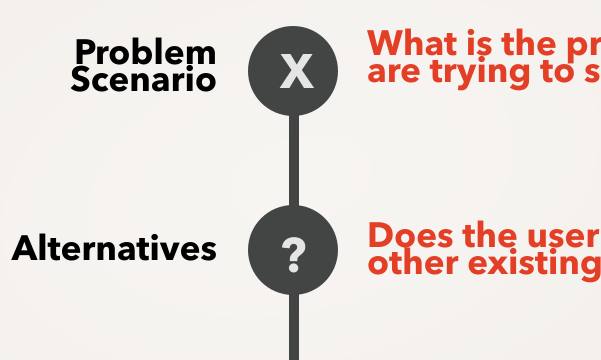
Red Route/Value Proposition
This is Value Proposition design.


